
“I’m working on Unit 8 of my math – Measurements and Multiplication. I feel like I can finish it in a couple weeks and move on to Unit 9. Math is my favorite subject. I love having Ms. Erika as a teacher. She helps me with math and vocab and every single subject. She’s always polite. Anytime I do something for her, she thanks me. I love Ms. Rebecca, too. She helps me with my work and she’s very polite. I love going to Ms. Karey and Ms. Jen. I love going outside and playing soccer with my friends. I love helping people. I also love reading and writing. That’s something that I never thought I’d actually like but I do.” -J. (4th grade student)
Tag: school
-

10 COMMON REASONS WHY STUDENTS SAY THEY DON’T LIKE SCHOOL
-
It’s boring
-
My class is too hard
-
I don’t like the teacher (teacher is mean)
-
I’m not good at ________ (subject)
-
I can’t concentrate in class
-
Homework
-
I never do good on exams, no matter how hard I try
-
I get in trouble for talking in class
-
I don’t like getting up early
-
I’m interested in other things than what they teach
When students know how to study and how to learn, they can overcome all of the reasons they have for not liking school.
Study Technology provides them with the tools they need to be successful students who enjoy learning and can apply that knowledge far beyond the walls of the classroom.
-
-

FOR WHAT PURPOSE?
As adults, we often push our children (and students) in an effort to assist them to attain what we know to be their full potential.
We tell them that they “must” know/learn/achieve certain things in order to be able to be successful in the grown-up world. This advice often falls upon deaf ears.
Very often we grown-ups overlook a simple fact: an individual (no matter how old or young) must have their own purpose for knowing, learning and achieving something in order for it to be truly valuable and useful to them. It isn’t enough to be told a reason that they ought to have, such as a graduation requirement, they need to find their own reason, one that is in alignment with their personal goals and interests, in order for it to be purposeful for them.
Purpose is a prime motivational tool and driving force for any individual–even children. When you find someone who is chronically apathetic, lazy or disinterested about learning something, help them to find their purpose. How will knowing this thing be useful to them as an individual and assist them in their goals and aspirations?
It’s not always an easy task, but it does serve a larger purpose.
Contact us to learn more about solutions to improve student interest in learning.
-

TEACHING POINT #1 INTEREST & USE IN LIFE
If one wishes a subject to be taught with maximal effectiveness, he should:
#1. Present it in its most interesting form.
Find something about the subject matter that engages and holds the attention of the students at the appropriate age level. Correlate the subject to something they already know, admire or have strong interest in. Showcase the wow-factor!
- Demonstrate its general use in life.
How do people use this in everyday life? Not “other” people or “some” people, but real people they know and identify with.
- Demonstrate its specific use to the student in life.
What does this have to do with them? How could they use this in their life to accomplish their goals and why would they want to?
As an example, when teaching beginning handwriting to 4-year-olds, I would appeal to their desire to be more grown-up. I would show them my driver’s license, tell them what it was and then ask them if they would like to drive a car and have their own driver’s license one day. The answer was always a unanimous “yes!” I briefly explained how I used handwriting to get my license and that I was going to teach them how to write so they would be ready when the day came. You would be hard-pressed to find another classroom of children who were more eager and proud of letter formation and handwriting than my students were. It was interesting to them; they saw the general use of it in life and they all had a specific purpose in mind that they could use the information and skill – and it was fully aligned to their desire to be grown-up.
Teaching is so much more than just imparting information dictated by a curriculum — it sparks a desire to learn in each individual student and makes it personal to them.
-
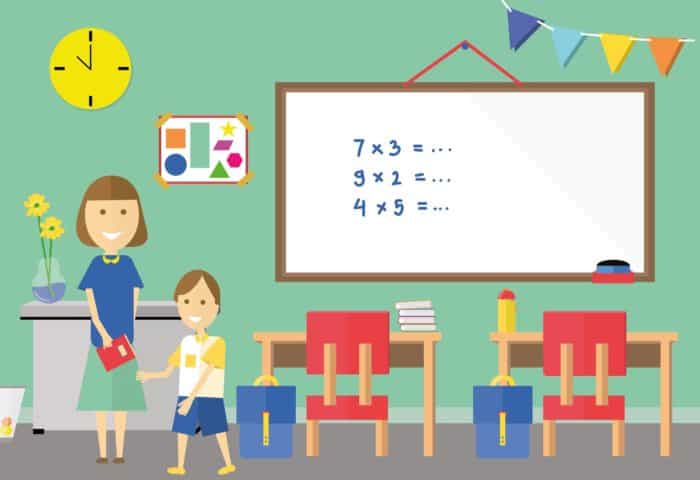
TEACHING POINT #2 KEEP IT SIMPLE
If one wishes a subject to be taught with maximal effectiveness, he should:
#2. Present it in its simplest form (but not necessarily its most elementary).
Break down concepts into simple terms so even complex subject matter is presented into bite size pieces that can be easily understood. Doctors describe medical procedures in “laymen’s terms” exactly for this reason; so the patient doesn’t need a medical degree to understand what is happening and what to expect.
– Gauge its terms to the understanding of the student.
Use nomenclature appropriate for the age group, ability level and experience of the student and make sure to define any unfamiliar or new words and keep those definitions clear and simple for the student. Most likely, you’re not talking to a third grader who is ready to tackle their Master’s thesis.
– Use terms of greater complexity only as understanding progresses.
Use a gradient approach to teaching. As student understanding and ability is increased in the subject, you can then step up the game and introduce more and more complex concepts and nomenclature as their understanding progresses. Older students may not have fully gotten earlier concepts as expected and this is how you can gradually increase their knowledge and understanding.
Does this mean that subject matter and learning should be dumbed-down?
Absolutely NOT!
This is how to build the foundation for all future successful learning and application in a subject. Complex concepts don’t have to be presented in a way that seems difficult to learn or understand.
Keeping it simple and progressing at a pace that students can follow and build upon is how anything in life is mastered and how learning should be: fun, interesting and relatively easy.
Learn more about how Study Technology can assist you in your pursuit of effective education.
Effective Education Publishing is a division of Applied Scholastics International.
© 2019 Applied Scholastics International. All Rights Reserved. Applied Scholastics, the Applied Scholastics open book design and the Effective Education Publishing design are trademarks and service marks owned by Association for Better Living and Education International and are used with its permission. Applied Scholastics International is a non-profit educational organization and does not discriminate on the basis of race, color, religion, national origin, sex, disability or age in administering student admissions or any of its policies, programs or activities.
-

TEACHING POINT #3 KNOWING IMPORTANCES
If one wishes a subject to be taught with maximal effectiveness, he should:
#3. Teach it with minimal altitude (prestige).
Any good teacher will tell you that teaching isn’t about showing off how smart you are or making sure that your students respect you because you have multiple degrees and they don’t. Teaching is about helping others learn – imparting knowledge in a way that they can understand, can participate in and ultimately so they can demonstrate competence in using that knowledge for benefit in their own lives.
· Do not assume importance merely because of a knowledge of the subject.My high school calculus teacher was brilliant. Nerdy, but brilliant. He spent his summers writing our math books because he felt the existing math curriculum wasn’t as effective as it could be. He was knowledgeable, competent and completely unassuming – his objective was solely on how to best help his students learn tough concepts so they could apply them logically and successfully. He measured his importance by how well his students were doing in math and not by how much he knew about math.
· Do not diminish the stature of the student or his own prestige because he does not know the subject.It kind of goes without saying, but making less of someone because they do not know about something, does not actually help them to know – it usually just makes them feel bad. The Spelling Bee Champ floundering in geography is still an exceptional speller. Their brilliance in one area will inevitably spill over into other areas – with patience and encouragement.
· Stress that importance resides only in individual skill in using the subject and, as to the instructor, assume prestige only by the ability to use it and by no artificial caste system.Having knowledge about something isn’t the same as demonstrating effective skill to put that knowledge to use. Information is not the same as action. Perfect exam scores do not automatically translate into competence of practical application. Knowing the theory of how to read a map is very different from actually having to use one to successfully navigate your way out of the wilderness. As long as data is stressed to be the most important factor in learning, students will always be lacking in skill and ability in using information to actually solve the problems encountered in life.
Brilliant teachers are brilliant because they are able to raise the ability level of their students, not just their grade point averages.
Learn more about how Study Technology can assist you
in your pursuit of effective education.
-

GRADIENTS: ONE STEP AT A TIME
It’s a basic concept we are familiar with, tackling tasks one step at a time, only progressing to the next thing once we have mastered the current step. It’s essentially Skill Building 101 and when done properly a solid foundation is built and competency is the ultimate result. Conversely, when a gradient has not been mastered and one tries to move along, confusion ensues.You would never expect to build a second floor structure if the foundation for the ground floor was incomplete and shaky.Learning follows the same principle: solid foundation = competency and the basic structure to continue to build upon.When you find a student having difficulty in math, take a look at the previous step(s) and find out what they missed and get that addressed and fixed up. Problems with division typically track back to confusions and inability stemming back to multiplication and even subtraction. To focus on handling the division difficulty immediately present is to ignore the earlier source of the real difficulty.This simple approach applies to any subject and creates the solid building blocks necessary to learning, ability, confidence and competence. Learn more about the simple solutions Study Technology provides.
 -
5 Easy Things to Help Your Kid In School
As a classroom teacher for over 15 years there are some really basic things that you, as a parent, can do to help your kid in school.
Feed Your Kid
Make sure that your child has something to eat before they come to school in the morning. Some kids aren’t really interested in eating a big breakfast before they come to school, but even something light will help get your child’s day off to a good start. For these students, we suggest a piece of fruit such as a banana, or a protein bar that isn’t loaded with sugar.
If you have trouble getting your child to eat anything in the morning, be sure and let the teacher know. Otherwise your child could get disciplined for being cranky when they really just need to eat. Ask the teacher to allow your child to have an early snack. (Honestly, it’s in the teacher’s best interest to have a student that is well-fed.)
Pack lots of nutritious snacks for your child to eat throughout the day. We know that kids can often be notoriously picky eaters. They love something one day and hate it the next. Packing a wide variety of snacks helps to ensure that there is always something that your child will be willing to eat.
Take your child to the grocery store and find out what they are willing to eat for snacks and lunches. Consulting your child on what to pack in their lunch box can help ensure that they are getting enough to eat throughout the day.
Realize that as kids are growing, especially during a growth spurt, they may need additional food to ensure that they aren’t hungry.
Don’t force your kid to eat or berate your child’s teacher because they didn’t eat enough. Trust me, teachers do the best they can to make sure that their students are getting enough to eat, but there is a limit to how much we can push a child to eat and often, pushing too much just makes the kid not want to eat anything because it becomes a game. (Not a very fun game, either!)
Make Sure Your Kid Gets Enough Sleep
Per Sleepfoundation.org, the amount of sleep that any given child needs varies widely. Below are some guidelines on how much sleep your child needs based on his or her age.
Age Recommended Hours of Sleep
3-5 years 10 to 13 hours
6-13 years 9 to 11 hours
Teens 8 to 10 hours
As a teacher, my guess is that 80% of students don’t get adequate sleep for their age.
Having a student in the classroom that is well rested makes huge difference in their ability to concentrate on their studies. You know how you feel at work when you haven’t gotten enough sleep the night before? Now imagine your child trying to learn new skills not having gotten enough sleep.
We recommend getting your child on a regular sleep schedule that also doesn’t drastically change over the weekend. We realize (hey, we are parents, too!) that often there are schedule changes that simply can’t be avoided, but generally having your child on some kind of schedule will make a big difference in ensuring that they get enough sleep.
Having trouble getting your child to sleep at night? Try some of these suggestions:
*Make a routine before bed that includes a wind down period. Be consistent (but don’t get anxious about it) and start early enough to ensure your child can get enough sleep.
*Lose the electronics in the bedroom. Period. If I had a dollar for every time a six year old told me that the reason he didn’t get enough sleep was because he was on a tablet or a phone…
*Avoid TV (and electronics) on school nights. Electronics stimulate the brain and can then make it hard for a kid to fall asleep.
*Create a sleep friendly environment that is cool, dark and quiet. Consider adding some ambient noise such a fan. (Nightlights are fine for kids that need them.)
*Make sure that your kid gets adequate exercise during the day. (But not right before bed.)
Read With Your Kid
Start reading to your child at an early age. I’m sure that there could be an endless debate on what is the best age to start reading to your child, but I think everyone agrees that it should be early and often. (In fact, you can make it part of the bedtime routine.) Parents that read to their kids show their kids that reading can be a pleasant and enjoyable experience. Even if you don’t love to read, try and cultivate a love of reading in your own kid.
Let them see you reading. If your child sees you reading (and enjoying it!) they will want to mimic you. One of the most amazing things that ever happened to me as a parent was when my three year old crawled up on my lap and started reading words from my book that she knew. She skipped the words that she couldn’t read, but I was super impressed by what she could read!
If you want to get a head start on reading, or supplement your child’s reading at school, we recommend phonics based reading programs. Whole language, whole word, and sight words are not the most effective way to get a child reading, despite what your school tells you. Teachers today are not being taught how to teach using phonics and it has become a lost art. This is truly sad when phonics has been consistently proven to work when teaching a child to read.
Be a Team Player
Work with your child’s teacher. Being a team player is an important part of ensuring that your child does well in school. Your child’s teacher does care about your child’s education.
It may seem that the teacher is too busy and doesn’t care about your child as an individual student. Realize that teachers are overwhelmed with the high numbers of students in their classes and the amount of material that they need to get their class through in a school year. Blaming the teacher for this doesn’t help. They generally don’t have a big influence on how many students they have in their class or what is dictated to them that needs to be done in a school year.
Having a parent that is willing to work as a team to help the child is very appreciated by teachers. We want you to be involved in your child’s education and we need your backup and support to help make the most of it. Our favorite parents are the ones that are willing to work with us as team players.
Here are some things that you can do to be a team player:
*Sit with your child while they do their homework.
*Make learning new things fun and exciting by doing activities in which learning is made fun.
*Make sure your child knows that you think education is important.
*Provide educational toys and activities at home.
*Volunteer your time at the school or support your child’s class in helping provide things that the classroom needs.
*Communicate with the teacher frequently. Even if it is just to get a 30 second update on your child’s progress. It shows your child that you are interested and taking note.
*Offer positive reinforcement when your child accomplishes something in school by rewarding them.
Be Your Kid’s Best Cheerleader and Advocate – This is important
Your child isn’t stupid. Your child is bright, funny, clever and brilliant. I mean it. And you are right. (Your kid is bright, funny, clever and brilliant.) I don’t care what their teacher says. I don’t care what “label” the school puts on your kid.
In all my years of teaching, the only students that I was not able to teach were those who were already so ruined on the subject of education that they were thoroughly convinced that they were stupid, they couldn’t learn and they were bad. Sometimes it took a while to get through to them, but if you give a child enough wins and successes in educating them, they actually do find that they are smart and they can learn. Consistent success goes a long way.
The reality is that in public schools, the teacher has a set amount of material that they have to get through in a given time period. They don’t have time to go back and clear up the confusions of their students or they won’t get through the material that they have to complete in a year. (Don’t blame the teacher, blame a broken system.)
I was fortunate enough to teach in private schools that had individual programs for each student. I was able to work with each student from where they were academically (regardless of age or grade level) and bring them up to where they needed to be. It does wonders for a student when you are able to work with them on material that is at the correct and actual level of where they are academically. By doing this, you can increase their abilities instead of piling on more and more confusions.
Instead of getting upset with your child because they are getting good grades in school, help find ways that your child can learn. Make sure that your child understands the words that are being used in the text and this will go a long way to helping your child be able to do the work.
If you are not confident in working with your child on a particular subject, work with the teacher to find an after school tutoring program at school or find a tutoring center that will work with your child and help build his or her confidence in the subject.
Remember that your child is bright, funny, clever and brilliant. Really.